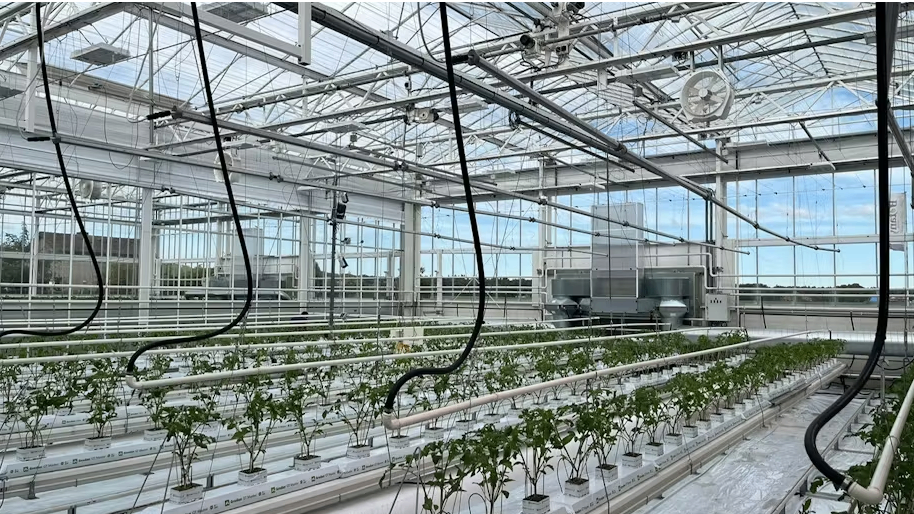

On 24 September, Axia Macxize XR plants were transplanted at Botany, with light levels increased to 350 µmol/m²/s, up from 300 last season. The trial partners are Ridder, Wireless Value, and Normec Groen Agro Control. Axia joins the established group of research partners.
Two growing scenarios are tested: multi‑channel LED toplighting versus a combination of toplighting and interlighting, keeping the same daily light integral (DLI) but optimising spectrum and intensity. Signify installed Philips GreenPower toplighting across the greenhouse and interlighting in half the area to deliver extra canopy light.
“We expect toplighting plus interlighting to boost light‑use efficiency through improved light and temperature distribution,” says Marcel Raats of Signify. “Objectives include understanding radiation balance at crop tops and refining screen control with Ridder to optimise energy use.”
Grodan stone wool supports precise water and nutrient management for a strong generative crop balance under low heat input. Together with Normec Groen Agro Control, drip composition is adjusted to improve nutrient uptake and prevent issues such as green spots or uneven ripening, securing fruit quality and yield.
Plant and fruit temperatures are closely monitored to steer crop balance from young fruits at the top to mature fruits lower down.
Last season’s low‑energy trial yielded 18.24 kg/m², Brix 9.32, and an average fruit weight of 12.20 g. Building on this, improvements included active dehumidification, higher‑insulation screens, extended closed‑screen hours, reduced rail‑pipe use, and dynamic LED spectrum control, lowering electricity costs by 2%. Low‑nitrate feed strategies optimised canopy development, while tuned K, Mg, and Ca ratios enhanced nutrient uptake and fruit quality. A stable greenhouse climate ensured consistent growth, paving the way for sustainable, high‑quality tomato production with less energy.